The Umbrians: Origins, History and Character of an Italic People
A 23-minute read
Before entering upon the subject it must be premised that the present-day region of Umbria occupies the territory of no fewer than three regions of the Augustan age: Etruria, to the right of the Tiber; Umbria, to the left of the Tiber; and northern Sabina, to the left of the Nera. The ancient population of the Umbrians, in turn, was distributed, between the Iron Age and the Roman Empire, also further to the east and north-east than present-day Umbria.
The ethnic name is attested in Greek inscriptions coming predominantly from Etruria (Fig. 1), while the mention of the territory to which the Umbrians belonged is owed to a South Picene inscription. According to the ancient sources there once existed a great protohistoric Umbria, extending well beyond the borders of what in the Augustan age would become the regio VI (Umbria) (Figs. 2, 3, 4). To Herodotus (Her. IV 49, 2) is attributed an early mention of the vast extent of Umbrian territory already in very remote times. Herodotus himself (Her. I 94, 6) and Dionysius of Halicarnassus (Dion. Hal. I 20, 4) refer to an actual extension of Etruria into Umbrian territory, at least for Perugia and Cortona, considered towns of Umbrian origin. As Pliny reminds us (N.H. III 112), it was again the Etruscans who conquered as many as three hundred Umbrian oppida, referring in all probability to those not far from the Tiber (Stopponi 2008), cited as the line of demarcation between the two peoples.
According to Livy (Liv. V 35, 2) and Stephanus of Byzantium (Steph. Byz. 492 M), the extent of the Umbrians’ territory corresponds, at least up to a certain period, with central and northern Italy, almost as far as the Alpine arc, to the limits of the river Po, while towards the south the Umbrians occupied, according above all to Greek sources (Ps. Scyl. Per. 16f), the Adriatic coastal strip lying between Ancona and the lands further south.
Pliny again (Plin. N.H. III 112) reminds us that the Umbrians were the most ancient population of Italy, and that the term Ombrii used by the Greeks would recall them as survivors of the rains after the earth had been overwhelmed by the waters.
To a clear opposition between Etruscans and Umbrians, neighbouring peoples divided, as has been said, only by the river Tiber, Strabo refers, confirming the presence of the latter also at Rimini and Ravenna, centres later included in the VIII regio of the Augustan division.
Antagonisms with peoples such as the Etruscans or the Iapygians, the (ancient) Apulians, are also recalled in the reference, present in the Tables of Gubbio, to their expulsion from the Iguvine community before the rite of the lustration of the army.
The contrasts and the state of conflict, and the shared demands of colonising expansion between the two peoples in the period between the Final Bronze Age and the early Iron Age, certainly did nothing to help the distinction between the two ethnic groups, Umbrians and Etruscans.
The complex geomorphology of the Umbrian territorial sphere strongly shaped the development of its human affairs. Along the eastern side the Apennine chain is separated from the Adriatic (Fig. 4) by a series of low, parallel, longitudinal hills alternating with valleys through which rivers and torrents flow, at whose mouths a series of landing points has been located, often replaced in later ages by fully-fledged protected harbours. Such is the case of Rimini, Pesaro and Ancona.
On the western flank of the Apennines the situation is quite different: great alluvial valleys extend on either side of rivers of large and small flow such as the Tiber and the Chiascio, the Clitunno, the Tessino, the Naia, the Nera, forming the Umbrian valley, the Tiberine, the Spoletan, the valley of Terni, and those of Gubbio and Gualdo Tadino, interspersed among themselves by the massifs of Subasio, the Monti Martani and the Apennine chain. It is a vast, varied and lively territory, rich in water, in woods and forests, offering scope for the development of settlements and for the exploitation of the soil, for various productive activities in agriculture and in the raising of livestock.
In particular, the presence of the broad river valley of the Tiber represented, already from prehistory, one of the principal routes of communication between the Tyrrhenian and the Adriatic. Frequentation of the territory is attested throughout the Palaeolithic and Mesolithic, and becomes more varied and complex during the Neolithic, in the course of which its use appears diversified and dependent on environmental and climatic conditions. The Early Bronze Age is attested by an intense frequentation and by a considerable cultural dynamism. Evidence of the Apennine and Sub-Apennine facies (Middle and Late Bronze Age) is documented throughout the territory of the Umbrians, with essentially seasonal settlement systems. The Final Bronze Age, marked by the Proto-Villanovan facies, brings elements of novelty, among which stands out the spread of the funerary rite of cremation in a territory of inhumation tradition.
The beginning of the Iron Age coincides with the stabilisation and organisation of the various ethnic-linguistic groups in those seats and territories that would later become historical, identified with the Apennine belt and, at the same time, with the heights and knolls surrounding the valleys. The poverty and scant knowledge of the archaeological data yielded by the settlements are partly compensated by those emerging from the necropolises and the sanctuaries.
For the first phase of the Iron Age the cases of Terni, Colfiorito, Spoleto, Spello, Gubbio, Gualdo Tadino, Todi, Amelia and Città di Castello are illuminating.
At Colfiorito (Bonomi 2010; Bonomi 2014), an obligatory point of passage from west to east along the Apennine ridge, stable settlements with the remains of huts begin as early as the 9th century BC (Fig. 5) and continue until the 7th century BC, accompanied by the presence of necropolises that long endure over time. These are types of villages predominantly set around lakes, where, alongside agricultural activities and stock-raising, a substantial hunting activity was practised.
The Orientalising period
Between the 7th and 6th centuries the development of the Umbrians has been compared and assimilated to the Etruscan model, with a division of the group into differentiated social classes, the formation of an aristocratic order, up to the realisation of the role of true princes, exactly as happened among other Italic peoples along the Apennine chain. This situation is found at Terni, Colfiorito, Spoleto and Gubbio (Fig. 3) and, along the Umbrian side of the Adriatic, at Matelica, Fabriano and Pitino (Fig. 4). The peculiarities of this gentilicial role are manifested above all in the necropolises, where the emergent tombs are distinguished by their monumentality and by the richness of their grave goods, in which, to signal economic and social prestige, materials of local production are joined by materials of Etruscan, Greek, Central European and Adriatic manufacture.
The two neighbouring Etruscan metropolises of Orvieto (Volsinii) and Perugia confirm the presence of Umbrian nuclei within both cities, in demonstration of a peaceful coexistence between two ethnic groups, certainly consolidated by marriage exchanges. The presence of battle weapons in the tombs of Matelica, Fabriano, Spoleto and Colfiorito, and often of the two-wheeled chariot (Colfiorito, Gubbio, Pitino), qualifies this aristocracy as a warrior one.
In this period the poles of aggregation of the individual communities, dispersed in settlements along important routes of transit and trade, are constituted by the sanctuaries, simple open-air places of worship, often characterised by the presence of bronze ex-votos representing warriors in arms, offerants both male and female, or animals and other votive offerings, strongly schematised (Figs. 6, 7), which only in some cases attain the level of a true and proper sculpture.
The extraordinary recovery of substantial grave goods from the necropolis of Piazza d’Armi at Spoleto, of which some fifty inhumation tombs have been excavated, reveals the reality of an élite with family nuclei of princely character and hereditary transmission of power between the end of the 8th and the middle of the 6th century BC, and configures a vast network of influences and of commercial and cultural relations over this zone of southern Umbria (Manconi 2014; Costamagna-Bruni-Giorgi 2014; Weidig 2015).
At the summit of this social fabric are the two male burials of princely or regal rank, with grave goods of exceptional richness, enhanced by the presence of four insignia of power: refined iron and bronze sceptres with zoomorphic representations of symbolic character (Figs. 8, 9 and 10).
The find gives prominence to the strong cultural influences of the whole Etruscan sector bordering the area of southern Umbria, from Latium to the Faliscan-Capenate territory, to Sabina, to Abruzzo, taking in the princely tombs of Matelica and of Pitino S. Severino, in the present-day Marche.
The Archaic Age
In the course of the 5th century the capacities for the accumulation of wealth, acquired above all through trade, and realised by certain figures belonging to the highest classes, with the characteristics of an aristocracy, generated a warrior power that finds expression in new models of self-representation.
In parallel, and consistently with the ensuing political organisation, from the second half of the 5th century BC the “urban” form develops in Umbria, often difficult to document and analyse owing to the constant superimposition of strata of the Republican, and then Roman, medieval and modern ages, especially in western Umbria, on this side of the Apennines. Many of the hills on which the Roman and later the medieval and modern centres would arise (Narni, Amelia, Otricoli, Todi, Spoleto, Spello, Assisi, Nocera Umbra, Gubbio, Camerino, Pesaro, Sarsina, Galeata) are occupied by stable residential settlements that would be transformed into true and proper urban centres.
On the contrary, many settlements documented on the plain (Maratta Bassa of Terni, the plateau of Colfiorito, Assisi, the plain of Gualdo Tadino) were abandoned owing to difficulties linked to the climate and to the insecurity of their position, and replaced by fortified hilltop settlements (the so-called castellieri), which organise themselves under the leadership of a hegemonic centre or of a sanctuary (Sant’Erasmo di Cesi), in a territorial system answering to the well-planned logic of a paganic-vicanal structure.
These settlements, located predominantly along the whole Apennine ridge, are regularly characterised by dry-laid rubble-stone enclosures and by ditches; they have circular, sub-circular or elliptical forms, are sometimes articulated over artificial terraces (Colfiorito, Monte Orve), and afford an easy control of a vast neighbouring territory and of its access routes. It is a true and proper structural configuration, a system documented and studied throughout the Apennine area, and present from the Monti Martani to the territories inhabited by the various Umbrian peoples: Fulginati, Plestini, Tuderti, Camerti, Tadinati, Eugubini, Sestinati, Nucerini, Spoletini, Amerini, Spellati, Mevanati, Ocriculani.
Between the 5th and 4th centuries BC, thanks above all to relations with the Etruscan world, one may envisage an evolution of the Umbrian sanctuaries as places of assembly for the communities.
Some in particular stand out, distinguished by offerings of an exceptional character, such as for example the statue of the Mars of Todi (Fig. 11), in the sanctuary of Montesanto, representing a warrior in the act of libation, or by the presence of written texts such as the bronze Tables of Gubbio (Fig. 12).
A genuinely planned urban development seems to become more appreciable at Spoleto, Gualdo Tadino, Pesaro, Verucchio, Bevagna and Spello. In cases of particularly fortunate excavations (Gualdo Tadino, Pesaro, Verucchio) it has been possible to ascertain that the residential nuclei are characterised by elevations built with dry-laid stone and raised in timber, with roofing of tegulae and imbrices.
With the 4th century the impulse to urbanisation grows more substantial, thanks to wider contacts with the Etruscan and Latin poleis, to the military and political entry of Rome into the Umbrian area, both in the Adriatic coastal strip and in the more interior one: precisely in this period the oppida organise themselves as true cities, with circuit walls and gates (Otricoli, Amelia (Fig. 13), Spoleto, Bettona), with the places of worship within them. But sanctuaries also persist, in territorial areas of paganic-vicanal type or as sanctuaries on heights (Foligno/Monte di Pale; Terni/Monte Torre Maggiore; Calvi/Monte San Pancrazio), or at obligatory points of passage (Colfiorito; Avigliano Umbro/Grotta Bella (Fig. 14)), or of border (Amelia/Santa Maria in Canale) and of transhumance (Monte Subasio, Fossato di Vico). The ceramic productions too undergo an interesting leap in quality and employ, at the same time, local impasto ware and imported pottery (Faliscan red-figure and black-gloss ware).
At the same time the structure of society undergoes a strong acceleration, with a different distribution of the offices of power, now entrusted to magistrates and priests rather than to individual dynastic nuclei, as the Tables of Gubbio or the sundial of Bevagna (Fig. 15), or a cippus from Foligno, confirm.
The Roman conquest
A series of interests deriving from various concurrent causes drove Rome to seek new lands of conquest. The region’s proximity to the Urbs very quickly made this need concrete, and it became still more tangible when the prospect of access to Picenum and to the resources of the Adriatic grew more realistic. Thus may also be explained the treaty (foedus aequum) of the Romans with the Umbrians (Camertes) at Camerino in 310 BC (Liv. IX, 36).
The access routes were consequently created, with well-planned itineraries. Among others the via Amerina: one of the corridors through which Fabius Rullianus in 308 pushed into the central part of the area, reaching Perugia and immediately afterwards Bevagna where, with uncontested success, he managed to subdue the region and all the Umbrian peoples (populi). Immediately afterwards an amicable foedus was concluded with Ocriculum.
Within a few decades the region was closed in a vice of conquest: in 299 Rome founded the Latin colony of Narnia (adversus Umbros missa Liv. X 1, 4-6), carried out the campaign of Sentinum (296-295 BC) (Liv. X 18-31) and that of Lake Vadimo (283 BC), created the maritime colony of Sena Gallica (284 BC), and triumphed over the Sarsinates (266 BC) (Liv. per. XV). Finally it founded the Latin colony of Spoletium in 241 BC, a true military stronghold, at the entrance to a great valley that opened the conquest to possession of the vast agricultural lands of Umbria, along an access route that in a short time (220 BC) would trace the course of a new and rapid road towards the Adriatic: the Flaminia (Fig. 16).
The Umbrians, already present from 279 in the ranks of the Roman army that fought at Ausculum (Dio. Hal. XX 1, 5), strengthened their adhesion to Rome on the occasion of Hannibal’s descent (Polyb. III 86, 1-11), suffering its logical reprisals.
In the course of the 3rd century BC, and at least until the beginning of the 2nd, various portions of Umbria were subjected to extensive viritane colonisations that affected the whole ager gallicus, but also the southern sector of the region, besides vast areas surrounding the via Flaminia, with the simultaneous involvement of the praefecturae of Interamna, Plestia, Fulginiae and Urvinum Hortense.
Between the 3rd and 2nd centuries BC, after the construction of the via Flaminia, a fully monumentalised building phase is documented for most of the urban centres (Spoleto, Trevi, Foligno, Spello, Assisi, Urvinum Hortense, Bettona, Bevagna, Città di Castello, Todi, Gubbio, Gualdo Tadino, Terni, Amelia, Carsulae, Otricoli, Sestino, Sarsina and, for the Adriatic part, Fano and Pesaro), most of which equipped themselves with walls and water systems.
Besides the construction of the via Flaminia and its branches, we must not forget the construction of other roads which, continuing ancient protohistoric itineraries, put the region in communication with the neighbouring ones (Latium, Emilia, Etruria, Sabina): besides the via Amerina, the Plestina and the Nursina. The superimposition of the medieval and then modern centres upon the ancient ones allows us only to glimpse the constant care taken in the restoration and construction of public buildings, as well as the monumentalisation of the temples, built both within the urban centres (Cannara/Collemancio) and outside, in extra-urban areas (Gubbio/Monteleto; Gubbio/Nogna: Fiorini-Di Miceli 2014; Spello/Villa Fidelia: Camerieri-Manconi 2012), which demonstrate the continuity of cults of cantonal or border character or mark important transhumance routes. Nor are examples of early self-Romanisation lacking.
The memory of the primitive tribal fragmentation nevertheless remains fundamental, expressed significantly by Pliny in his list of distinct Umbrian groups (N.H. III, 112-114): Amerini, Aesinates, Fulginates, Mevanates, Matilicates, Plestini, Sentinates, to which may be added, for completeness, a series of other ethno-toponomastic names restored by the epichoric epigraphy: ikuvins (of Gubbio), tutere (of Todi), tarina (of Tadino), nuvkri (of Nocera), amer (of Amelia), vukessestines (of the vicus of Sestino); from Etruscan onomastics: ucrislanes (of Otricoli); Faliscan: felicinate (of Foligno); from a South Picene text: spolítiú (from Spoleto) (Schreto 2011, 7).
In conclusion, the Umbrian populations still preserved, even in historical times, their own peculiar and singular identity, divided and fragmented, precisely in the differentiated urban programming and planning of so many small and medium-sized urban centres of the Republican age, which would then give life to the individual Roman municipia of the VI regio.
The phase of urbanisation completed the adoption of writing as an instrument of self-representation, including political self-representation, just as it did that of coinage, with two great centres of elaboration and inspiration. Within the framework of ancient Italy, scholars have placed Umbrian within the group of the Sabellian languages, of which it constitutes the most innovative variety, with traits of affinity with Latin and Faliscan (Screhto est 2011, 6).
The collection of inscriptions in the Umbrian language, little more than thirty testimonies in all, includes public inscriptions, sacred dedications, boundary markers, inscriptions of ownership and funerary inscriptions, artists’ signatures and coin legends. The most important document is constituted by the Iguvine Tables (Fig. 12) (Prosdocimi 1984), seven bronze tables inscribed in the Umbro-Etruscan and Latin alphabets, a unique testimony within the Italic panorama. Found at Gubbio around the middle of the fifteenth century in the area of the Roman theatre, they are one of the most extraordinary documents of the civilisation and of the pre-Roman Italic world. They are tables cast in bronze and document ancient texts preserved and used by the Atiedian brotherhood, which coordinated the public ceremonies of the city.
The nuclei of the graphic elaboration of Umbrian are dated to Todi and Gubbio, between the 4th and 3rd centuries BC, recognising Todi’s priority for the innovation of the Umbrian alphabet princeps (Maggiani 2014). To these two centres all the other alphabets documented in Umbria are tributary. To these same dynamic centres, Todi and Gubbio, is also owed the contemporary capacity to strike coinage in Umbria.
The phenomenon of Roman conquest is followed, already from the end of the 3rd century BC, by a coherent process of linguistic acculturation, with the adoption of Latin as the alphabet and language of the region (Fig. 17).
With the conferment of citizenship (lex Iulia de civitate) in 90 BC, all the principal Umbrian settlements would be transformed into municipia, with the exception of the praefectura of Plestia, and would definitively adopt Latin in both the public and the private sphere.
Caesar took possession of the region in 49 BC and levied troops in the various cities. After his death the cities of Umbria also took part in the repeated uprisings.
The territorial and certainly also the social order was completely overturned by the foundation of the new colonies in the triumviral age (Todi, Pesaro, Fano, Spello), by the viritane distributions, and in particular by the continual influx of new multitudes of people who benefited from allotments of land at the expense of the local communities. In any case, by the 1st century BC the process of unification of Umbria under Roman citizenship may be said to have been definitively concluded, with the realisation of administratively autonomous municipal ordinances. Complete Romanisation was achieved under Augustus. After the bellum perusinum (40 BC), the cities that had aligned themselves on different fronts were treated in different ways; among others Spello, which had found itself on Octavian’s side, saw its territory enlarged in the area of the springs of the Clitunno and towards Arna.
In the years between the Social War and the Augustan age there was a substantial reorganisation of the cities and of the territory, the latter also on the basis of centuriation, well documented by the Liber coloniarum, largely the fruit of the Augustan reorganisation and of the new division into regions. Between the second triumvirate and the Augustan age the planning foundations were renewed, or laid anew, for the urbanisation of more than forty cities of the VI regio. The viae publicae, the bridges, the aqueducts, the principal public buildings and the temples, the very numerous theatres, the amphitheatres, the domus and the villas, often adorned with mosaics of remarkable quality, were rebuilt or built anew. The important building works often involved, in various forms, municipal euergetism*.
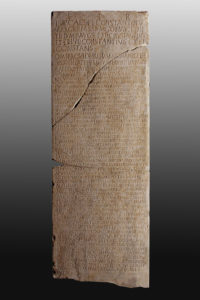
In the following centuries Umbria is only rarely mentioned in the sources, but in the 4th century AD the Constantinian Rescript (Fig. 18) illuminates for us the religious importance of the centre of Spello in late antiquity (Zuddas 2012)
- To be understood in an orographic sense (Ed.)
- The bestowal of gifts and public works upon the community for various occasions and purposes. (Ed.)
Bibliographical references:
-Angelelli, C. and L. Ponzi Bonomi, eds. Terni-Interamna Nahars. Nascita e sviluppo di una città alla luce delle più recenti ricerche archeologiche. Collection de l’École Française de Rome 362. Rome: École Française de Rome, 2006.
-Berichillo, C. “Tuder, storia di un territorio.” Ostraka 18.1 (2009), 9-97.
-Bonomi Ponzi, L. “Terni, Colfiorito, Gualdo Tadino: tre casi emblematici dell’Umbria antica.” In L’Étrurie et l’Ombrie avant Rome. Cité et territoire, Actes du colloque International, Louvain-la-Neuve 13-14 février 2004, edited by P. Fontaine, 165-193. Brussels – Rome: Brepols, 2010.
-Bonomi Ponzi, L. “L’evoluzione del sistema insediativo umbro dalle origini alla conquista romana.” In Gli Umbri in età preromana 2014, 189-213.
-Bonomi Ponzi, L. and Manconi, D. “s.v. Umbria.” In EAA, II Suppl. V, 875-887. Rome: 1997.
-Bradley, G. Ancient Umbria. State, Culture and Identity in Central Italy from the Iron Age to the Augustan Era. Oxford: Oxford U. P. 2000.
-Camerieri, P. and Manconi, D. “Il “sacello” di Venere a Spello, dalla romanizzazione alla riorganizzazione del territorio. Spunti di ricerca.” Ostraka 21.1-2 (2012): 63-80.
-Catalli, F. “Monetazione preromana in Umbria: le zecche di Tuder e Iguvium.” In Antichità umbre nei Musei di Budapest e Cracovia, 140-152. Perugia: Electa, 1989.
-Coarelli, F. and H. Patterson, eds. Mercator placidissimus. The Tiber Valley in Antiquity. New research in the upper and middle river valley, Rome 27- 28 February 2004. Quaderni di Eutopia 8, 15-44. Rome: Quasar, 2008.
-Costamagna, L. Bruni, N. Giorgi, F. “La necropoli umbra di Spoleto: nuovi rinvenimenti 2008-2009”, in Gli Umbri in età preromana, 2014, 297-317.
-De Marinis, G. G. M. Fabrini, G. Paci, R. Perna and M. Silvestrini, eds. I processi formativi ed evolutivi della città in area adriatica. BAR International Series 2419. Oxford: Archaeopress, 2012.
-De Vecchi, P. (ed.). Museo Civico di Gualdo Tadino. Rocca Flea 2. Materiali archeologici e ceramiche dal XVI al XX secolo. Perugia: Electa, 2002.
-Fiorini, L. and Di Miceli, A. “Il tempio in loc. Caipicchi (Nogna). Il contesto di rinvenimento e il monumento.” In La Media e Alta valle del Tevere dall’Antichità al Medioevo. Proceedings of the Study Day (Umbertide, 26 May 2012), edited by D. Scortecci, 197-215. Umbertide: Daidalos, 2014.
-Giontella, C. “Umbria: Todi (Perugia) – Via del Forno.” Studi Etruschi 61 (1996): 489-492.
-Gli Umbri in età preromana. Proceedings of the 27th Conference of Etruscan and Italic Studies (Perugia-Gubbio-Urbino 27-31 October 2009). Pisa, Rome: Fabrizio Serra, 2014.
-Leonelli, V. La necropoli dell’Età del Ferro delle Acciaierie a Terni. Contributi per un’edizione critica. Grandi contesti e problemi della protostoria italiana, 7. Florence: All’insegna del Giglio, 2003.
-Maggiani, A. Nardo, A. “Le città umbre e la scrittura”, in Gli Umbri in età preromana, 2014, 391-411.
-Manca, M.L. “Gli ultimi rinvenimenti a Colfiorito durante i lavori della S.S. 77”, in Il santuario umbro romano a Cancelli di Foligno. Archeologia e scuola, edited by M.L. Manca, M.R. Picuti and M. Albanesi, 17-19. Perugia: Fabrizio Fabbri, 2014.
-Manconi, D. Gubbio, Todi, Spoleto, Spello: realtà umbre a confronto,in Gli Umbri in età preromana 2014, 123-155.
-Manconi, D. “The Umbri”, in Farney, G. D. and G. Bradley, eds. The Peoples of ancient Italy, 603-636. Boston/Berlin: De Gruyter, 2018.
-Micozzi, M. “I corredi di Gualdo Tadino nel Museo di Villa Giulia.” In Gli Umbri in età preromana 2014, 327-356.
-Prosdocimi, A. Le Tavole Iguvine, I. Florence: Olschki, 1984.
-Roncalli, F. Il ‘Marte’ di Todi. Bronzistica etrusca ed ispirazione classica. MemPontAc ser. 3, vol. 11, 2. Rome: Tip. poliglotta vaticana, 1973.
-Screhto est. Exhibition catalogue, 22 September 2011-8 January 2012. Agostiniani, L. A. Calderini and R. Massarelli, eds. Perugia: Università degli studi di Perugia, 2011.
-Silvestrini, M. and T. Sabbatini, eds. Potere e splendore. Gli antichi Piceni a Matelica. Exhibition catalogue, 19 April-31 October 2008. Matelica, Palazzo Ottoni. Rome: L’Erma di Bretschneider, 2008.
-Sisani, S. Umbria Marche. Guide Archeologiche Laterza. Rome, Bari: Laterza, 2006.
-Sisani, S. Umbrorum Gens Antiquissima Italiae. Biblioteca della Deputazione di Storia Patria per l’Umbria, 5. Perugia: Dept. Storia Patria Umbria, 2009.
-Stopponi, S. “s.v.” “Popoli e culture dell’Italia preromana. Gli Umbri.” Enciclopedia Italiana -Treccani. Rome: Treccani, 2004.
-Stopponi, S. “La media valle del Tevere fra Etruschi ed Umbri.” In Coarelli and Patterson 2008, 15-44.
-Torelli, M. “Etruschi e Umbri: interferenza, conflitti, imprestiti.” In L’Étrurie et l’Ombrie avant Rome. Cité et territoire. Actes du colloque International, Louvain-la-Neuve 13-14 février 2004, edited by P. Fontaine, 219-230. Brussels, Rome: Brepols, 2010.
-Weidig, J. “Studi sulla necropoli orientalizzante di Spoleto, Piazza d’Armi – una visione preliminare.” In F. Gilotta – G. Tagliamonte, Proceedings of the Seminar “Sui due versanti dell’Appennino.Necropoli e distretti culturali tra VII e VI secolo a.C.”, S. Maria Capua Vetere, 12 November 2013, edited by F. Gilotta and G. Tagliamonte, 47-77. Rome: Giorgio Bretschneider, 2015.
-Zuddas, E. “L’Umbria nell’era costantiniana.” In Aurea Umbria. Una regione dell’impero nell’era di Costantino, Exhibition catalogue, Spello, Palazzo Comunale 29 July 2012 – 6 January 2013. Bollettino per i Beni culturali dell’Umbria, n. 10, Anno V (2012), Quaderno 6, edited by A. Bravi, 61-70. Viterbo: BetaGamma Editrice, 2012.
FIGURES
Fig. 1. Paris, Louvre Museum: Corinthian krater from Cerveteri, side A: comic scene, the Ophelandros Painter (600-575 BC)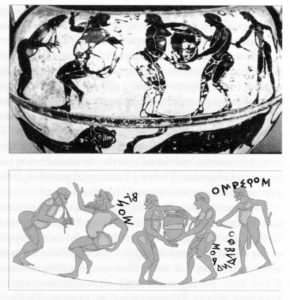
Fig. 2. Regio VI: Umbria
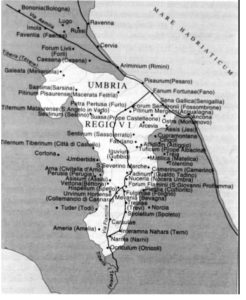
Fig. 3. Umbria
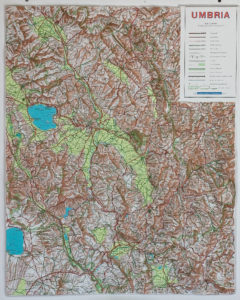
Fig. 4. Marche
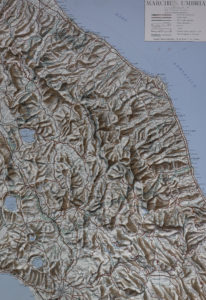
Fig. 5. Colfiorito di Foligno: Iron Age settlement near Plestia
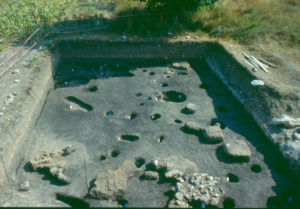
Fig. 6. Assisi, Civic Museum: bronze statuettes from Monte Subasio
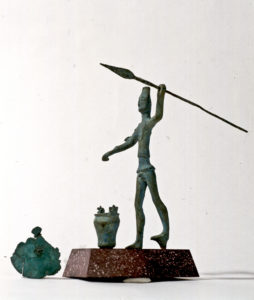
Fig. 7. Colfiorito di Foligno, from the sanctuary of the goddess Cupra: bronze statuette of a warrior
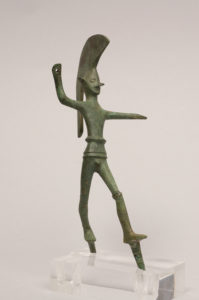
Fig. 8. Spoleto, National Archaeological Museum, from Piazza d’Armi: swords
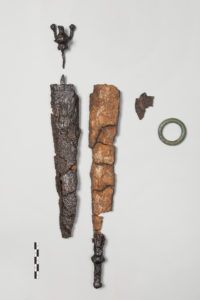
Figs. 9 and 10. Spoleto, National Archaeological Museum, from Piazza d’Armi: sceptres
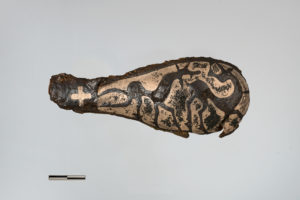
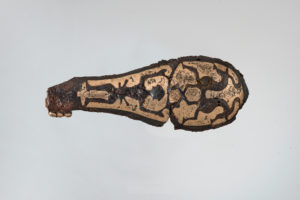
Fig. 11. Rome, Gregorian Etruscan Museum: from Todi, Monte Santo, bronze statue of the so-called “Mars of Todi”
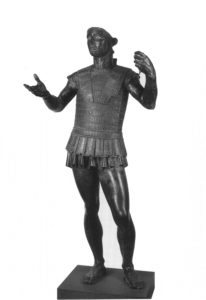
Fig. 12. Gubbio, Civic Museum: one of the Tables of Gubbio (Va)
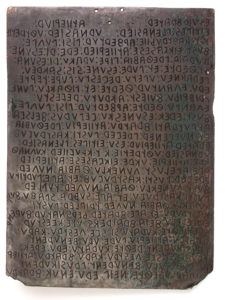
Fig. 13. Amelia, walls in polygonal masonry
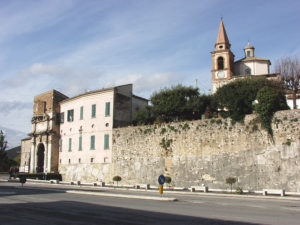
Fig. 14. Perugia, National Archaeological Museum, from Montecastrilli, Grotta Bella: model of a small temple
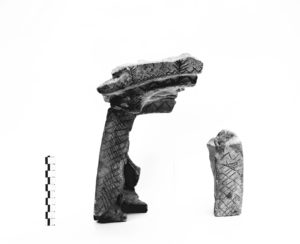
Fig. 15. Perugia, National Archaeological Museum, from Bevagna, Madonna del Core: sundial (late 2nd century BC)
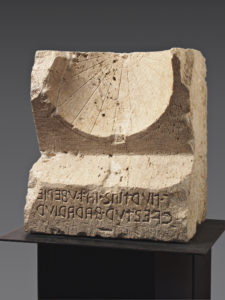
Fig. 16. Route of the via Flaminia
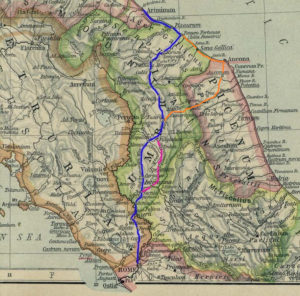
Fig. 17. Spoleto, National Archaeological Museum, from Castel Ritaldi: inscription on a cippus
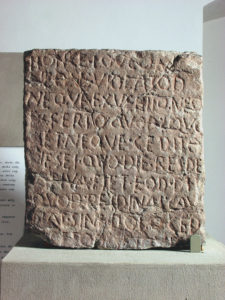
Fig. 18. Spello, Town Hall: rescript of Constantine
Dorica Manconi served as Archaeological Officer of the Ministry of Cultural Heritage in Umbria from 1976 to 2012 and as Director of the National Archaeological Museum of Perugia from 2000 to 2005
The photographs were taken by Valentino Pescari of the Archaeological Superintendence of Umbria, whom the author thanks.